
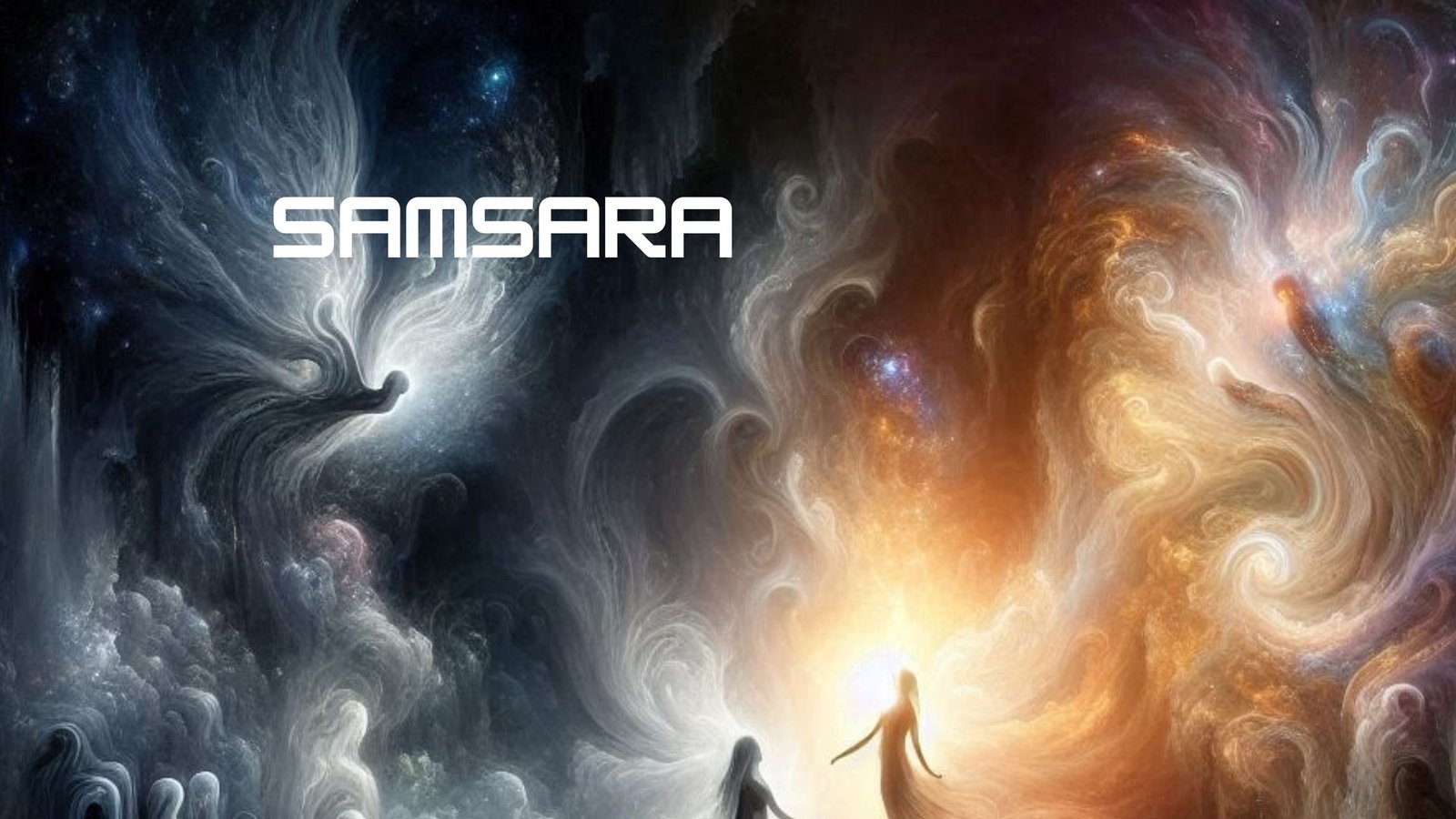
Stuck in an endless cycle of desire and suffering? Need to escape to Nirvana or Moksha? Let’s explore the concept of Samsara and endless cycles of existence.
Samsara: Cyclical Existence in Classical and Contemporary Contexts
Samsara is a foundational concept in several Indian philosophical and religious traditions, including Hinduism, Buddhism, and Jainism. It refers to the continuous cycle of birth, death, and rebirth, governed by the moral law of cause and effect (karma). In classical sources, Samsara is described as a repetitive process in which beings experience multiple lifetimes shaped by previous actions. The concept is often presented as a condition of suffering or dissatisfaction, from which liberation (moksha or nirvana) is the ultimate goal.
Cyclical Patterns in Human Behavior
Beyond its religious framing, Samsara can be used as an analytical model for understanding recurring destructive patterns in human behavior. Psychological research identifies stable behavioral loops such as habit formation, conditioned responses, and repeated emotional patterns, all of which mirror the cyclical structure described in Samsara.
These patterns may arise from early life experiences, social conditioning, or internalized belief systems. In this context, Samsara functions as a metaphor for the persistence of learned behaviors across time.

Algorithmic Reinforcement and Digital Recurrence
Modern digital systems introduce a new form of cyclical experience. Recommendation algorithms, behavioral prediction models, and personalized content feeds create feedback loops that reinforce past preferences and actions.
These systems analyze user behavior and generate content that aligns with prior patterns, effectively reproducing earlier choices and limiting exposure to new information. This process resembles a contemporary, technological form of Samsara, in which individuals encounter repeated versions of themselves through algorithmic curation, clogs in a system that is designed to keep them attached to endless, practically inescapable, cycles.

This creates a self‑perpetuating system in which past actions heavily influence future experiences.
Intentional Cycles and Constructive Recurrence
Not all cycles are inherently negative. In many disciplines, like skill development, artistic practice, and scientific inquiry, repetition is a necessary component of mastery. And such mastery of one’s self is necessary to develop the discipline needed to escape the cycles of Samsara.
Cyclical processes can provide structure, stability, and opportunities for refinement. Within this framework, Samsara can be interpreted as a neutral or even beneficial model of iterative growth. The distinction between harmful and constructive cycles depends on whether the recurrence limits or expands an individual’s capacity for change. The cycles that trap you are the one’s triggered by desire and suffering:
Suffering > Desire to Not Suffer > Temporary Relief > Suffering > ad infinitum
There are methods to escape such cycles, including the 8-Fold Path of Buddhism, the teachings of Jesus, and Kundalini meditation, and many other practices.
Non‑Finality and the Concept of Ongoing Becoming
A central implication of Samsara is the rejection of fixed or permanent identity. Classical traditions emphasize that beings undergo continuous transformation across lifetimes.
. In a secular context, this principle aligns with contemporary theories of identity as dynamic and evolving. Psychological and sociological models increasingly describe the self as a fluid construct shaped by ongoing experiences rather than a static entity.

This perspective positions Samsara as a framework for understanding:
- Identity as iterative rather than final
- Change as an ongoing process
- Selfhood as a series of developmental stages
The absence of finality allows for continuous adaptation and redefinition. If you were to equate a day with a life and thus sleep with death, maybe the concept is easier grasp and death wouldn’t be so scary as we’d have more faith that we’d awake the following life. But in modern times, a scared consumer is more beneficial to corporations and the powers that be than an enlightened citizen, which, if anything, is a threat to their empire.
Nirvana: Escaping the Endless Cycles
Samsara provides a comprehensive model for examining cyclical processes across multiple domains: religious, psychological, technological, and developmental. Whether interpreted literally or metaphorically, the concept highlights the persistence of patterns and the potential for transformation within those patterns. In both classical and contemporary contexts, Samsara underscores the tension between recurrence and change, offering a lens through which to analyze how individuals navigate repeated experiences while seeking opportunities for growth.
In classical Indian traditions, liberation from Samsara is described through concepts such as Nirvana (Buddhism) and Moksha (Hinduism and Jainism). These terms refer to the cessation of the cyclical process of rebirth and the end of the conditions of craving, ignorance, or accumulated karma, which perpetuate repeated existence.

In modern secular contexts, “escaping Samsara” includes disrupting maladaptive habits, reducing the influence of past conditioning, and interrupting algorithmic feedback cycles that reinforce previous behaviors. Contemporary equivalents of liberation emphasize agency, adaptability, and the ability to redefine one’s identity over time. Instead of a final state, the modern analogue to Nirvana is the capacity to step outside repetitive patterns and engage in intentional, self‑directed change that leads to state in which the ego absolves and the need for bodily concerns no longer exists.
© 2026 All Rights Reserved.
Now read the Top 10 Best Ways for Dealing with Existential Dread.
