
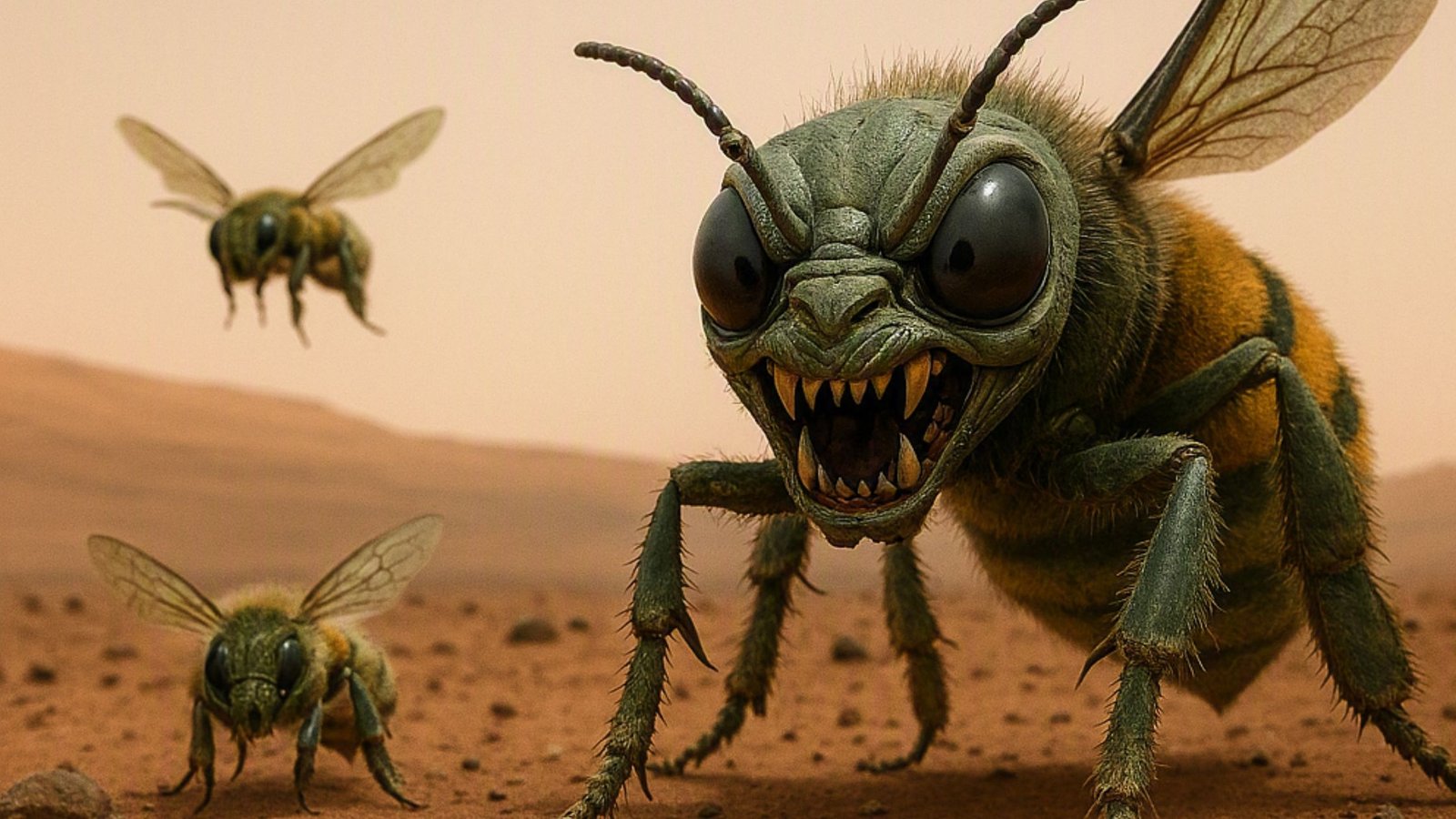
NASA Mars rover has documented a vast expanse of honeycomb-like textures in a Martian valley nicknamed “Valle Grande.”
Prompting an agency-wide evaluation of what some researchers are calling the most “suspiciously intentional” geologic features in the history of the Red Planet, the Mars rover has found hexagons on the planet’s surface.
NASA Mars Rover Discovers Hexagonal Structure

While climbing the foothills of Mount Sharp, the rover captured a 360-degree panorama on sols 4,930 and 4,931 showing polygonal fractures spreading in every direction. These structures, measuring approximately 1.5 to 3 inches (4 to 8 centimeters) across, wrap around the base of a 20-foot-tall butte known as “Miraflores”.
While project scientist Ashwin Vasavada noted that similar patterns have been seen before, the scale of this "sea of polygons" has effectively "taken our breath away".
The “Space Bees” Hypothesis
Despite the traditional geologic explanations, which suggest the honeycomb textures formed through mud cracks or thermal cycles, a growing contingent within NASA’s Astrobiology division is leaning into a more "buzz-worthy" theory.
One lead astrobiologist Dr. Lena Harrow has described the structures as “frankly kind of adorable” and noted that the clear hexagonal geometry is evidence of either organized geological processes or "extremely organized interior designers" from another world.

“The wind doesn’t just do that,” Dr. Harrow noted, addressing the specific, repeating hexagonal symmetry found throughout Valle Grande.
NASA’s internal scientific community has reportedly divided into two distinct schools of thought regarding the discovery:
The Bee-Adjacent Theory
Proponents suggest the hives were created 3.2 billion years ago by ancient organisms that functioned like bees but were merely "hexagonal enthusiasts".
The "Definitely Bees" Camp
Led by Dr. Miguel Renteria, author of the upcoming paper “Buzz Aldrin Was a Warning,” this group maintains that actual bees, possibly wearing tiny, ancient space helmets, once inhabited the "Palm Springs of the solar system" when Mars was wetter and warmer.
Technological and Social Implications
NASA’s preliminary hypothesis suggests these "hives" date back to a period when Mars could have supported life.

While the rover has previously found organic molecules believed to be precursors to DNA and RNA, the discovery of a planetary-scale honeycomb field raises new questions about ancient Martian flora and whether we may owe the planet back taxes for eons of honey consumption.
The news has already ignited a global frenzy, with #MarsBees trending as the public debates whether these "interdimensional pollinators" were preparing the planet for future human colonization. Some critics, however, warn that this may be another instance of "sensationalism in science," drawing parallels to the 2010 "arsenic-based life" controversy where "good stories" were prioritized over exhaustive verification.
Future Exploration: Project Apis-1
To resolve the debate between "geology" and "Space Bees," NASA is currently fast-tracking a specialized investigation rover named Apis-1. The proposed suite of instruments for the next NASA Mars rover mission includes:
- A chemical analysis suite to detect trace amounts of extraterrestrial royal jelly.
- A specialized robotic arm shaped like a honey dipper.
- An external speaker system designed to play jazz music to soothe any remaining Martian bees that may have survived.

Who wouldn’t want to listen to jazz on Mars?
"Whether these structures were built by ancient Martian bees or extremely bored geological processes," the agency noted in an internal memo, "Mars is no longer just a dead planet. It is a dead planet with beehives.” At least according to the NASA Mars rover, who personally has a strong opinion on the matter.
It told scientist, "If this ain't space bees, I don't know what it is."
Like aliens? Buy the book Laenif on Amazon!
© Written in jest, 2026. All rights reserved.